
In this guide
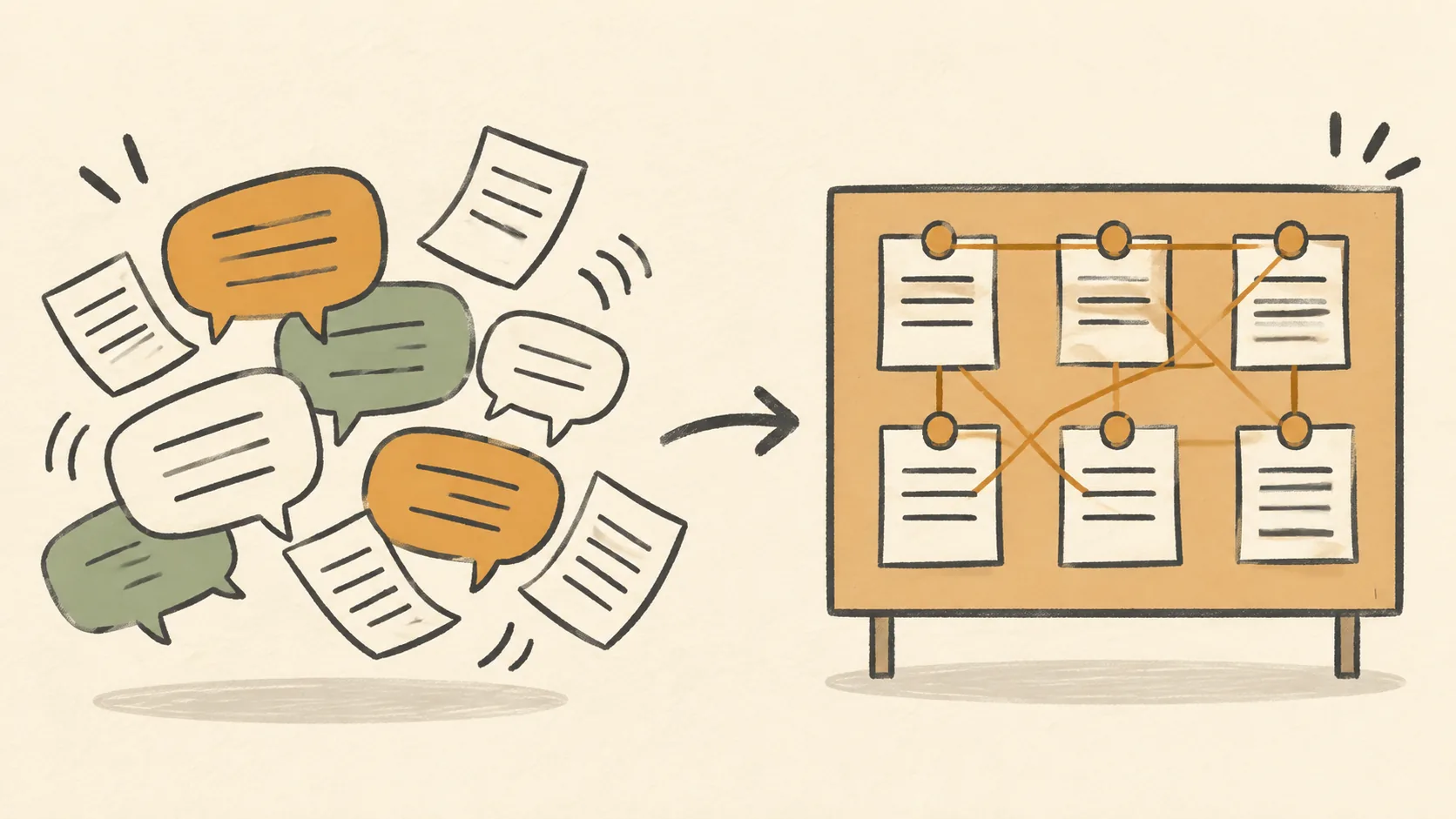
The most common failure in an author’s AI setup is not a missing tool. It is four tools that each know a different version of the book.
Brainstorming happens in one chat. Drafting happens in a document. Editing happens in a third app. Your notes — the years of experience the book is supposed to be about — live in a folder nobody opens. Every move between them costs a copy-paste, and every copy-paste loses a little context. By the time the draft is long, the setup is doing more work than the writer.
A tools list written for clicks makes this worse by adding rows. A list written for a finished book removes them. Here is the short version, organized by the job each tool has to do.
The five jobs a book has
| Job | What it has to hold | What usually goes wrong |
|---|---|---|
| Ideation | A premise, an angle, a promise to the reader | Endless options, no decision |
| Drafting | Chapters at a steady length | Context drifts, voice shifts |
| Continuity | Facts, terminology, what has been covered | The model forgets by chapter ten |
| Editing | Mechanical fixes and structural judgment | Rewrites that flatten the voice |
| Publishing | Export, metadata, disclosure | Format surprises at the end |
Five jobs do not mean five subscriptions. They mean five questions to ask of whatever you are using.
Job one: ideation
The useful tool here is not a generator. It is a constraint.
“Give me a book idea” produces the average of every book the model has read. “I want a practical guide for first-time landlords, built from the eleven repairs I got wrong in my first three years” produces something you can work with. The more of the constraint is yours, the less generic the output.
Your own archive is the best idea generator you will ever own. A basketball coach with ten years of training notes does not need a thousand new topics; he needs one honest angle into the notes he already has. “Shooting form, for players who have been coached badly” is an angle. “Basketball” is a shelf.
Keep the decisions in the project, not in the chat. A premise you liked on Tuesday is gone by Friday if it only exists in a scrollback. Write it down as a fact the book has to honor, and the drafting stage inherits it for free.
Job two: drafting
The unit that works is the chapter, and the chapter needs a goal, not a topic.
A topic says “a chapter about injuries.” A goal says “by the end of this chapter, a coach can tell a stress fracture from shin splints and knows the three questions to ask before pushing a player back.” The second version gives the model a starting state and an ending state, so the chapter has somewhere to land.
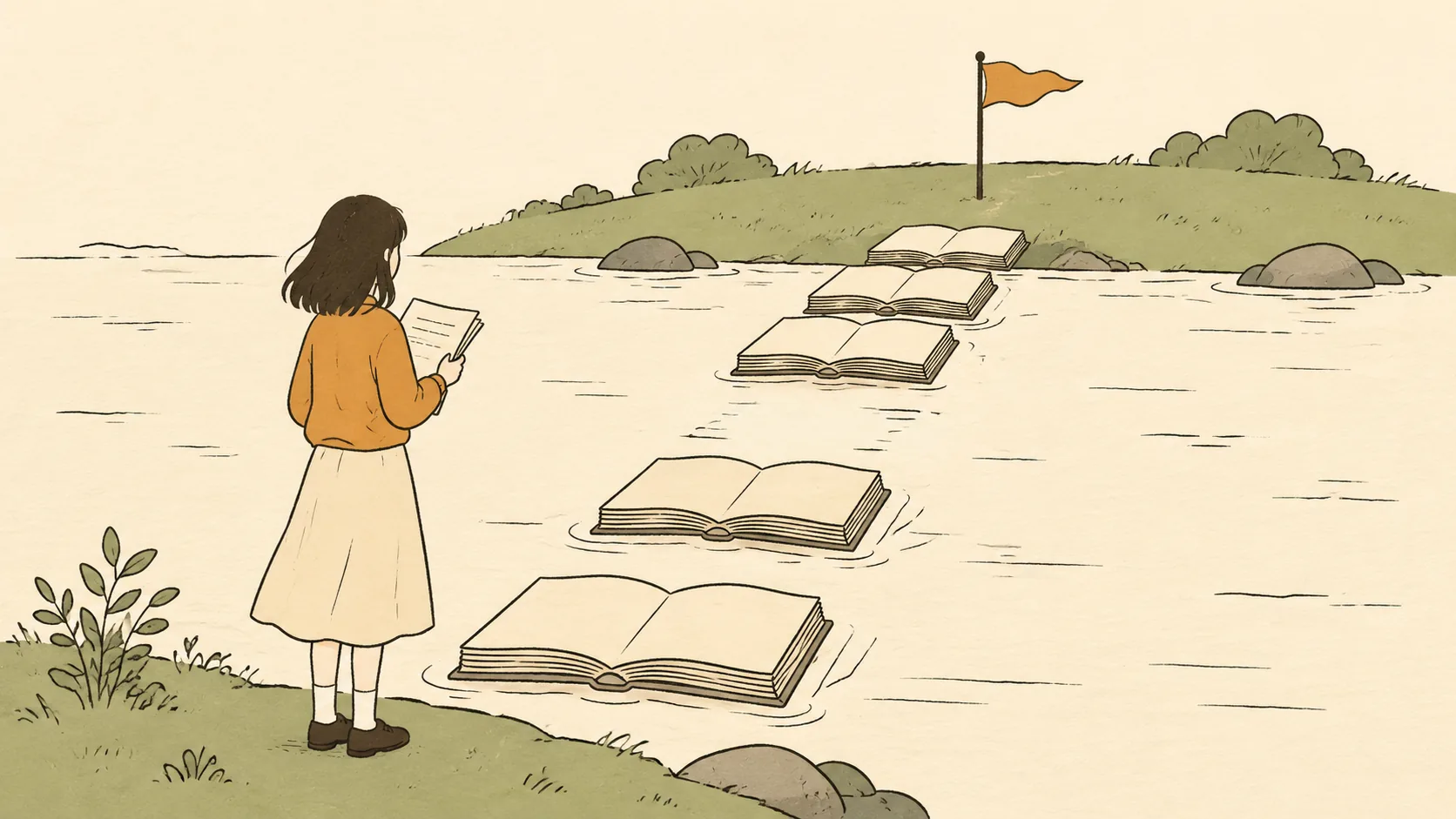
Length is a planning decision, not a talent. In our editor, chapters default to 1,200 words and can be set between 400 and 4,000. A 25,000-word guide is about 21 chapters at the default; a 70,000-word memoir is about 58. When the middle sags, the fix is usually to rewrite the goals of the next block, not to buy a better model.
If you are drafting with a general model, paste the chapter goal and your notes every time. If you are drafting in a workspace, they are already attached to the chapter.
Job three: continuity
This is the job that separates a tools list from a toolkit, and the one most lists skip.
The parts of a book that are expensive to lose are not the sentences. They are the facts of your experience: the dates, the numbers, the client cases, the terms your industry uses, and the promises you made to the reader in the introduction. A model asked to “keep it consistent” has nothing to check against. A model handed five labeled facts can be caught when it contradicts one.
In our editor, that lives in three places:
- Facts — label-and-value pairs injected into every chapter. “The first gym was on Huaihai Road, twelve courts, no heating” is a fact a chapter can violate. “The gym was important” is not.
- Already covered — topics the book has explained, so later chapters are told not to re-teach them.
- Voice & structure — the tone, tense and formatting rules that get injected verbatim, so the book sounds like one person wrote it.
Long reference material goes in Sources: your notes go in as plain markdown or text files, stored in a knowledge base you mount to the book. While writing, you choose which library the chapter may read from. A chapter on injuries consults the injury file; a chapter on recruiting consults the tryout file. Nothing from a different book leaks in.
The test for any tool: when you open chapter twenty, can you see what chapter three established without scrolling? If not, the tool is not a writing tool. It is a text box.
Job four: editing
Editing is two jobs wearing one coat, and they need different tools.
The mechanical layer — typos, punctuation, terminology, repeated phrases, tense slips — is where automation earns its keep. The structural layer — whether the middle sags, whether a chapter earns its pages, whether the ending pays the promise — is where automation fails most confidently.
A workflow that respects the split:
- Ask for a diagnostic memo first: what is broken, where, and why. Do not ask for a rewrite in the same pass.
- Decide which findings are real.
- Fix them in your own words, or ask for a targeted rewrite of one passage.
- Keep versions, so a suggestion never overwrites the manuscript.
Also do the free things: read the chapter aloud, or have it read to you. Change the font before a pass. Print it. The ear catches what the eye fills in.
Job five: publishing
Export and disclosure are the end of the pipeline, and they are boring in the way that a foundation is boring.
Export early once, at chapter three, so you learn the format before you have sixty chapters to lose. Then check the platform’s AI policy before you upload, and answer the disclosure question honestly. Readers who are told the book is AI-assisted still read it when it is worth reading. Readers who feel tricked do not come back.
A cover is a separate decision. AI cover art is allowed on some platforms and discouraged on others, and it is the first thing a reader judges. If you are going to spend money on one thing, spend it here or hire a human.
Where the experience gets in
A tool list is easy to follow and still produce a weightless book: grammatically clean, perfectly organized, and empty. The reason is simple. A model working from a blank prompt can only produce the average of what it has read — and the average is exactly what your readers can get anywhere.
The fix is not a better model. It is a shorter distance between your material and the page.
Our workflow is built around three steps:
- Put the experience in. Drop your notes, logs, client stories and drafts into a knowledge base as markdown or text. One library per subject, so the book only sees what belongs to it.
- Build the frame first. The platform proposes the main sections and the chapter skeleton. You correct the order and the goals. This is the one step that has to be yours.
- Fill from the knowledge. Each chapter is written against its goal and your mounted notes, then saved with a recap for the next chapter. The sentences may be generated; the substance comes from your files, not from the model’s memory of the internet.
That is the difference between “AI wrote a book” and “I wrote a book with AI’s help.” The second one is the only version a reader can feel.
What not to buy
- A second workspace. If the draft lives in two places, one of them is wrong.
- A generation subscription and a continuity subscription. Continuity should be a feature of the place you draft, not a separate app you have to remember to update.
- A tool whose demo is a paragraph. A paragraph is the easy part. Ask what happens at chapter thirty.
- Five free trials at once. Test tools on the same chapter, one at a time. Feature lists do not survive contact with your book.
A ninety-minute setup
- Write the premise in one paragraph: who the book is for, what they will be able to do, and what it costs them to keep doing it wrong.
- Add five facts per key person or case, plus the terms your industry uses and the timeline’s zero point.
- Plan chapters in one-line goals, written as changes. Read them in order and check the pressure rises.
- Draft three chapters, then stop and read them together.
- Decide the export format and the publishing route before chapter four, not after chapter forty.
That is the whole list. The tools are the easy part. The decisions are the work.
The bottom line
An AI tools list is useful only if it ends with fewer tools than it started with. Pick one place for the manuscript, one general model for questions, and one system that holds your material, the book’s facts and the plan. Then spend the time you saved on the parts a tool cannot do: deciding what only you can tell the reader, and rewriting the page they will judge.
Key takeaways
- 1Organize tools by job, not by brand: ideation, drafting, continuity, editing, publishing.
- 2Your own notes are the best idea generator; an angle beats a shelf.
- 3The unit of drafting is the chapter, and every chapter needs a goal written as a change.
- 4Continuity lives in stored notes and facts, not in the model’s memory.
- 5A book written from your material has weight; a book written from a blank prompt has the average.
Frequently asked questions
Do I need several AI tools to write a book?
You need one place for the manuscript and one general model for questions. Everything else is optional. The tools that matter are the ones that hold the parts of the book you cannot keep in your head: your notes, your experience, the chapter plan and the promises you made to the reader.
Which AI tool is best for writing a book from my own experience?
The one that can take your material in. If your notes, training logs or client stories live in files, look for a tool that stores them as a knowledge base you can mount to the book and consult while writing. A model with a blank chat window can only return the average of what it has read.
Can I write a book with free AI tools?
You can draft with free tiers, but the free limits usually bite at the point where a book needs continuity: long context, many chapters, re-generation. Plan for a paid tier by the time you pass chapter ten, or expect to rebuild context by hand every session.
Are AI writing tools detectable?
Often, especially in the first pages, and no tool can promise otherwise. Detection is not the useful question. Whether the book gives the reader something is. Keep your own experience, your own examples and your own judgment in the draft.
Sources
- Google Search Central — Creating helpful, reliable, people-first content — read on 2026-11-16
- Amazon KDP — Content guidelines: AI-generated content — read on 2026-11-18
About the author

One useful essay, every other week
Notes on writing, publishing, and the unglamorous parts of shipping software. No roundups, no growth hacks.