In this guide
- A chat window is a session; software is a project
- The four things it has to hold
- Structure
- Facts
- Plan
- Files in, files out
- Why 80,000 words breaks a conversation
- Where the words come from: your documents
- What you should be able to see at any moment
- The honest case for shorter books
- What to check before you buy any of it
- The bottom line
Every few months a new tool promises a book from a single prompt. The demo is always a chapter, never a manuscript, and there is a reason for that. One chapter is a language-model problem. A whole book is a systems problem: state that survives weeks, facts that stay true, a plan that can be repaired, and a file that uploads.
That distinction is what "software" should mean here. Not a nicer text box. A project.
A chat window is a session; software is a project
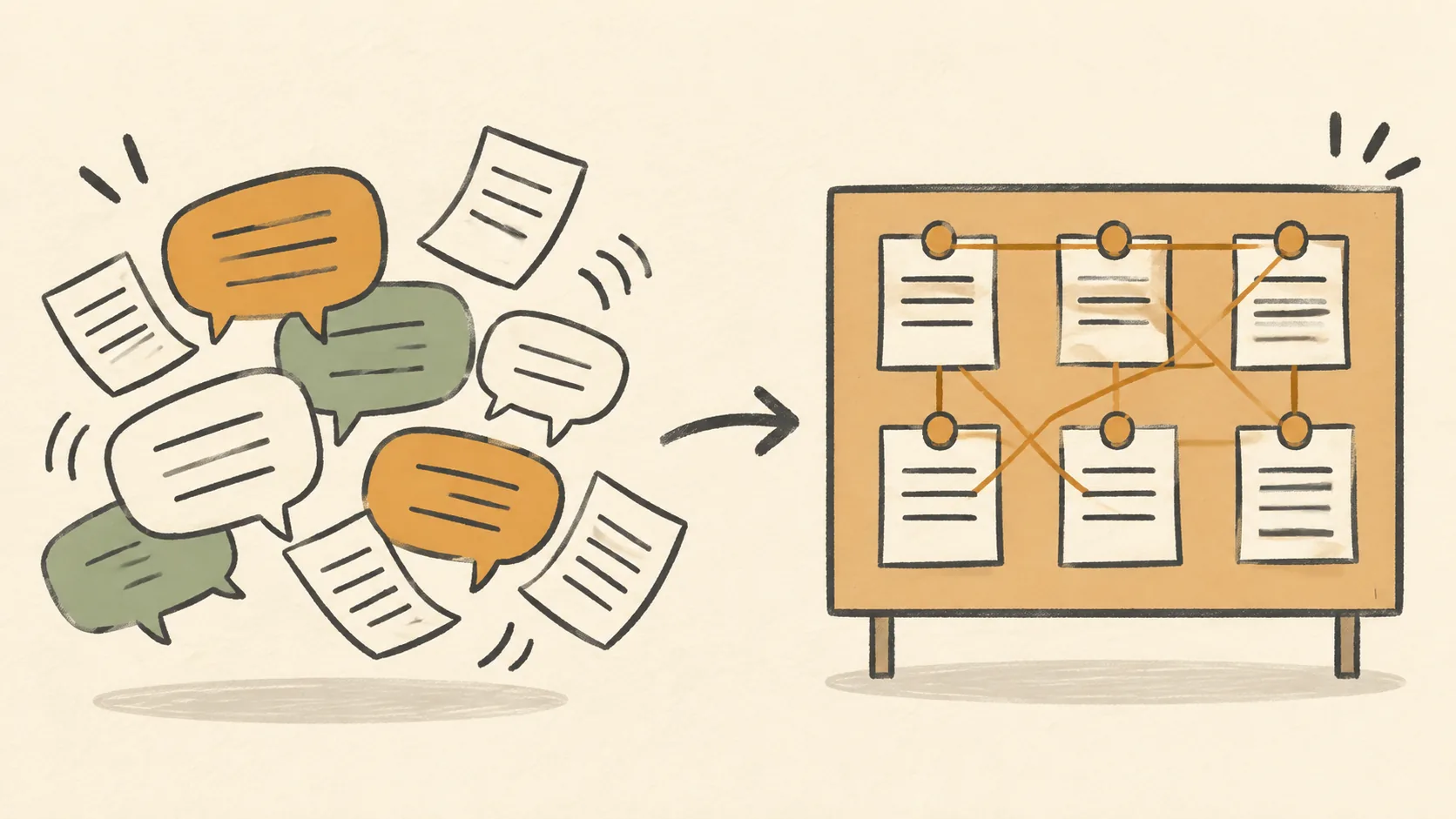
A session starts fresh. You paste context, you get output, and when the context runs out the book exists only in the transcript. Every new conversation begins with a summary of what you did before, which is already a lossy copy of the manuscript.
A project starts from stored state. The plan is in the database. The facts are in the database. The chapters are rows with a status, not messages in a thread. Opening the book tomorrow costs nothing, because nothing has to be reconstructed.
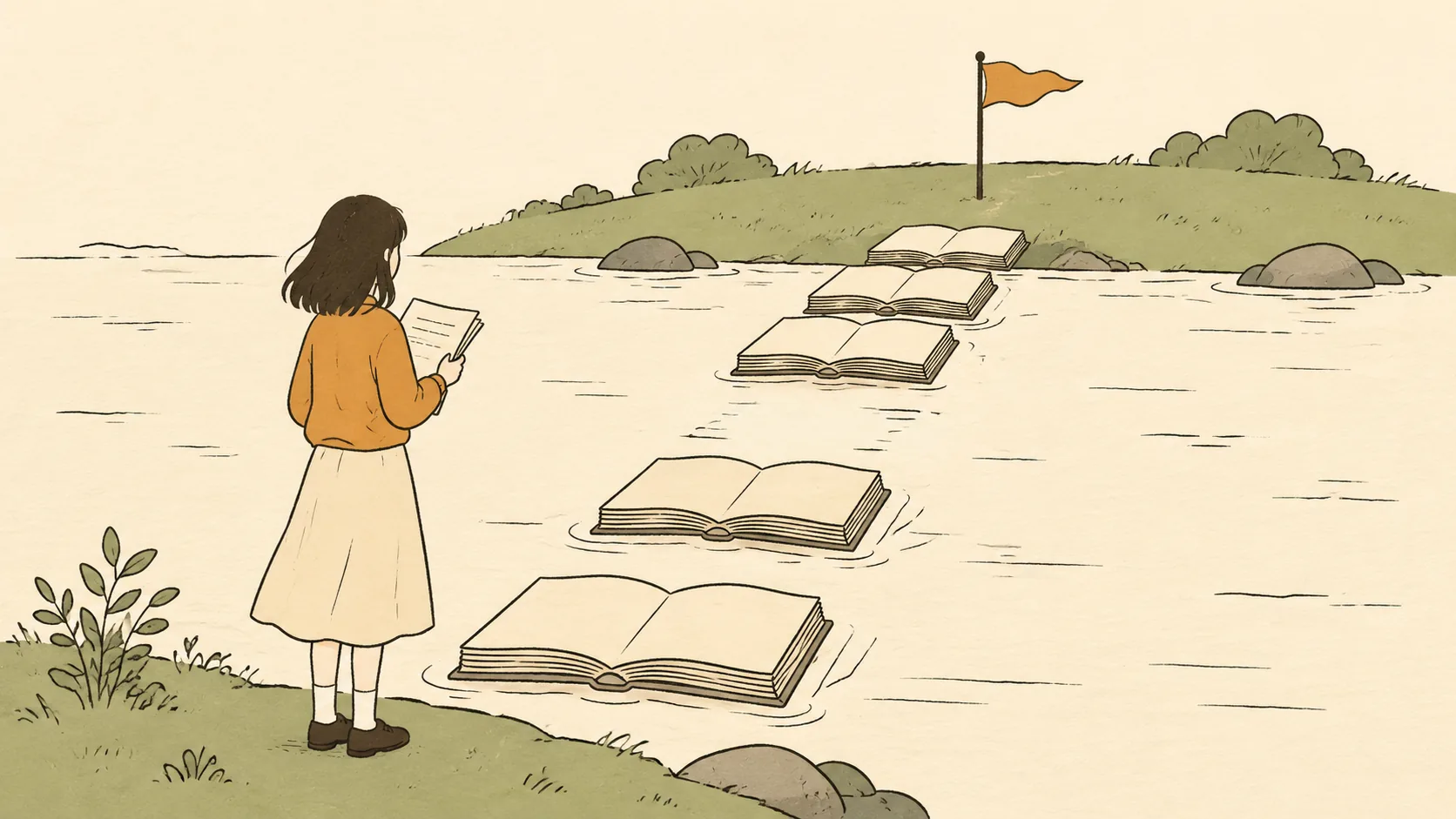
This is the difference that shows up around chapter ten. Before that, a good prompt and a good project produce similar pages. After that, one of them remembers what page three promised.
The four things it has to hold
Structure
A book type, not just a genre. The type decides what a unit is called and how long the whole thing runs: a guide in chapters at 20,000 words, a workbook in exercises at 12,000, a devotional in dated entries at 9,000, a lead magnet in five to eight short sections at 4,000, a memoir at 30,000, fiction at 70,000.
Structure is also what the model is briefed with. A guide chapter and a novel chapter should not be written to the same instructions, and a cookbook's unit is a recipe with ingredients, steps and a failure note. If the software hands every type the same brief, the type picker is decoration.
Facts
The binding layer. Facts are label-and-value pairs injected into every chapter prompt: the reader, the numbers, the rules, the mistakes, the things this book will not claim. The panel keeps them separate from a "already covered" list, so later chapters do not re-teach what earlier ones explained.
A fact has to be falsifiable. "Be practical" is not a fact. "Every recipe uses one pan and under 30 minutes" is, and it will change what the model writes in chapter nine.
Plan
A list of units with a title and a one-line goal each, editable and regenerable. Plans run from 3 to 60 units. Regenerating appends rather than overwrites, so a writer can redo the second half without losing the first.
The plan is also the cheapest place to fix a book. Rewriting one chapter costs a chapter. Rewriting one plan costs five minutes and changes ten chapters.
Files in, files out
Sources go in: your notes, interviews, a previous edition, research. A finished file comes out: EPUB 3 for KDP, Apple Books and Kobo; DOCX for print interiors and Draft2Digital; Markdown if you want the text elsewhere. Front matter and back matter are part of the export, not a separate chore.
Why 80,000 words breaks a conversation
Do the arithmetic. At 1,200 words a chapter, 80,000 words is about 67 chapters. Even at 2,000 words, it is 40. That is weeks of work, dozens of decisions, and a cast of characters or a set of examples that all have to stay consistent.
A conversation breaks in three predictable ways:
- Context runs out. The model stops seeing chapter four while writing chapter fourteen, so it re-explains or contradicts.
- Summaries drift. Each new session compresses the last, and the compression loses exactly the details that made the book specific.
- Cost becomes unforecastable. If every chapter re-sends the manuscript, the bill grows with the book, and you find out at the end.
A project avoids all three by sending a small, fixed-size context: the premise, the type brief, the facts, the previous chapter's recap, and the tail of the chapter you are continuing. The manuscript stays in the database. Continuity stays in one place.
Where the words come from: your documents
Structure keeps a book coherent. It does not make it yours. That comes from material only you have: client notes, interviews, a course transcript, three years of a newsletter, the internal doc nobody outside the company has read.
Mounted knowledge bases supply that. A base is a set of files attached to the book — up to 12 bases per account, 200 files per base, 10 MB per file — in PDF, DOCX, Markdown, text, CSV, JSON or HTML. For each chapter, the system retrieves the passages most relevant to that chapter's title, goal and your steering note, up to eight of them, and passes them in with their source labels.
The source labels matter. A model that can attribute a claim to a filename is less likely to blur three documents into one confident voice, and you can check the claim later.
What you should be able to see at any moment
A project has a status, and you should be able to read it without opening a chat.
- The chapter list, with each unit marked as planned or written.
- Word counts per chapter and for the book.
- The facts panel, and the list of topics already covered.
- Which sources are mounted, and how many passages the last chapter used.
- The export state: which formats exist, and what is still missing.
If a tool hides all of that behind a prompt box, it is not holding your book. It is holding your hopes.
The honest case for shorter books
The 80,000-word manuscript is the aspirational case, and it is also the hardest. Fiction is where readers judge the prose hardest, and where AI disclosure matters most. Our own fiction type defaults to 70,000 words and carries a publishing note that says so.
The books that fit this workflow best are shorter and more useful: a 4,000-word lead magnet that collects emails, a 12,000-word workbook that accompanies a course, a 20,000-word guide that teaches one skill end to end, a 30,000-word memoir that sells your services. These books are bought for an outcome, and an outcome is something facts and structure can actually serve.
That is not a compromise. It is where the money is, and it is where a project beats a prompt most clearly, because the reader can tell within two pages whether the book knows something they do not.
What to check before you buy any of it
- Does it store facts outside the prose? If the only memory is the chat, it is a session.
- Does the plan regenerate without destroying the draft? You will rewrite the plan. Make sure you can.
- Does the cost scale with the book or with the transcript? Fixed-size context is the difference between a plan and a surprise.
- Can you mount your own documents? Otherwise every chapter is written from the model's average of the internet.
- Does the export open on a phone? Test it before you write 40 chapters, not after.
The bottom line
AI book writing software is worth paying for when it holds the parts of the book that are expensive to lose: the structure, the facts, the plan and the files. An 80,000-word manuscript does not need a longer prompt. It needs a place to live, and a writer who reads what comes out.
Key takeaways
- 1A session holds context; a project holds the book. The difference shows at chapter ten.
- 2Facts, not adjectives, are what make the draft yours — and they have to be stored outside the prose.
- 3A small fixed context per chapter keeps continuity and cost predictable at 40 or 67 chapters.
- 4Mounted documents are how the book stops sounding like the model’s average.
- 5Shorter, outcome-driven books — lead magnets, workbooks, guides — fit this workflow best.
Frequently asked questions
Can AI book writing software produce 80,000 words?
It can, at a chapter an hour, but the length is not the hard part. Holding one premise across 60-plus chapters is. Our fiction type defaults to 70,000 words, roughly 58 chapters at 1,200 words, and the plan and facts panel are what keep it from drifting.
Is book software better than ChatGPT for writing a book?
For drafting a book, yes, because the software holds the state between sessions: the plan, the facts, the covered topics and the sources. ChatGPT is better for thinking, editing and arguing with your premise.
Do I need to upload my own documents?
No, but it is the fastest way to make the book yours. A knowledge base mounted on the book supplies your notes, interviews and past material to each chapter, and the book's facts panel is still the binding layer above it.
Sources
- Google Search Central — Creating helpful, reliable, people-first content — read on 2026-11-16
- Nielsen Norman Group — How Users Read on the Web — read on 2026-11-16
About the author

One useful essay, every other week
Notes on writing, publishing, and the unglamorous parts of shipping software. No roundups, no growth hacks.