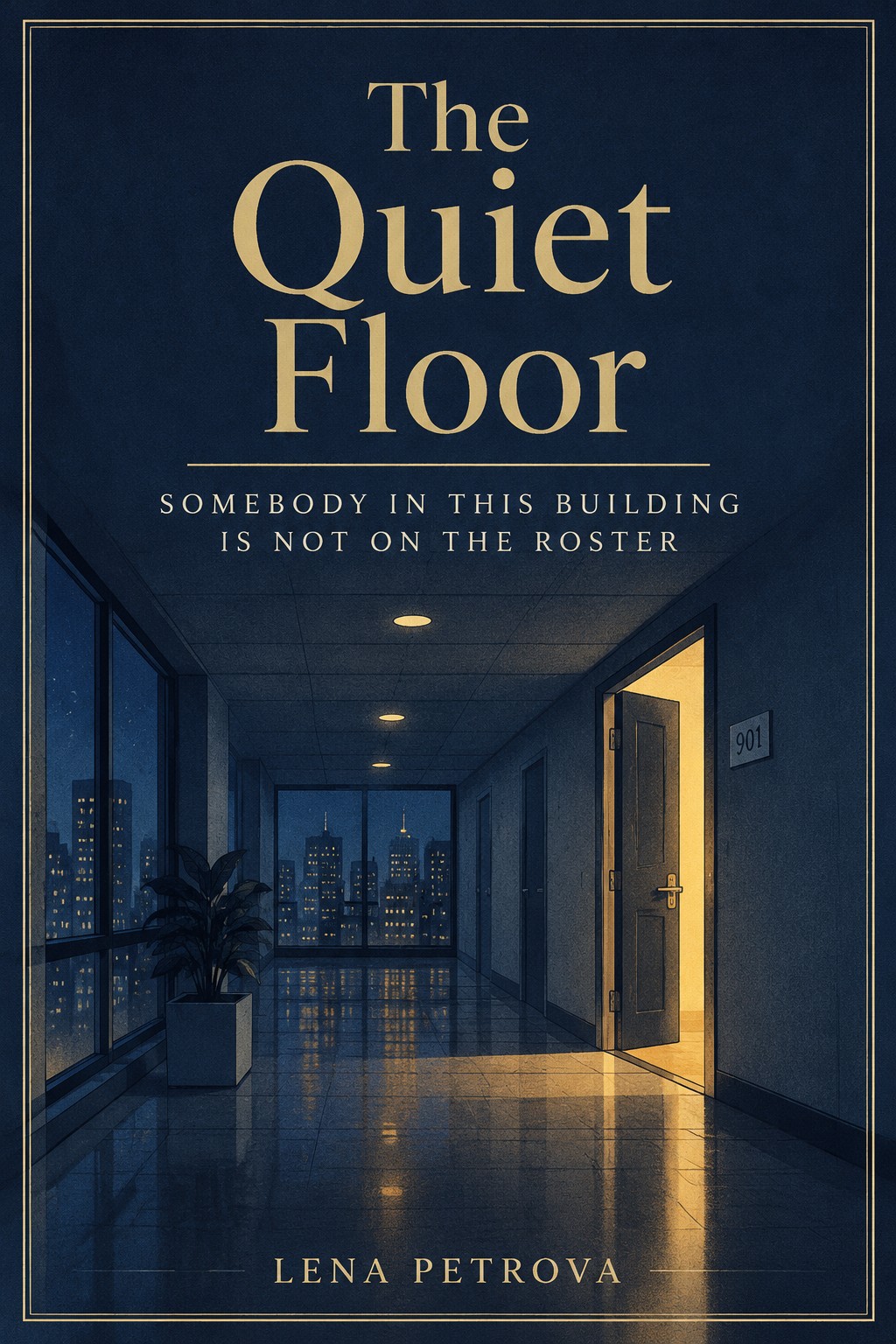
The Quiet Floor
Somebody in this building is not on the roster
by Lena Petrova
A facilities manager notices that the ninth floor uses more electricity than its staff should — and that one of its employees has been logging in for a year after the company says they resigned.
How this one was built
Built from the fiction template. The floor plan and access rules were held as key facts so the thriller could not cheat its own geography.
Sample only — the manuscript is not for sale. The plan is free to copy.
Read the first chapter
The opening, in full. About 2 min. Turn the pages with the arrows, your keyboard, or a swipe.
Chapter 1
After-hours usage
The report was supposed to take twenty minutes. Ana had built it herself, and it was a simple thing: electricity by floor, month by month, for the quarterly sustainability review that nobody read and everybody signed.
She was halfway through the ninth floor when she noticed the anomaly. Ninth floor usage after seven p.m. had gone up in March, stayed up through the summer, and was still up in October, while every other floor followed the shape of the office calendar. The building emptied on Fridays. The ninth floor did not.
Facilities had a number for this sort of thing, and the number was usually a faulty sensor. She wrote "check panel 9B" in her notebook and moved on. Then she opened the access log, because the panel check required a badge, and the badge log was the fastest way to see whether anyone would be on the floor.
What's inside
1 chapters · 376 wordsEvery chapter in the book, with the one-line recap it is written against. The first is free above; the rest arrive as empty pages when you copy the plan, and cost 3 credits each to write.
Chapter 1 — After-hours usage
Ana pulls the energy report for the quarterly review and finds one floor that never sleeps.
Who it is for
For readers who want tension from a building, a badge reader and a spreadsheet rather than a car chase.
What you end up with
A full novel plan: the discovery, the pressure from above, and a final night in a building where every corridor is a decision.
Build mine from this
Plan free · 1 credits to write the chaptersYou get the same 1 chapters, in the same order, with the same recaps — and an empty page under each one. Change the title and the angle, then write it in your own words.
Or start with your own idea
Pick the type, write the premise, and the plan gets generated for your topic instead. Export it as EPUB when it is done.