
In this guide
The phrase “free online book editor” covers four different jobs, and conflating them is how writers end up disappointed twice: once because the tool did not fix the book, and once because it fixed it into something flatter than the draft.
Editing is not one pass. It is a sequence, and each step needs a different kind of attention.
The four layers of editing
| Layer | Question it answers | Who is good at it |
|---|---|---|
| Developmental | Does the book work? | A human who reads the whole thing |
| Line | Is each sentence clear and alive? | A human, with AI as a second reader |
| Copy | Is it correct and consistent? | Tools are strong here |
| Proof | Are there typos or formatting slips? | Tools are strong here |
A free editor can cover the bottom two well and the middle one partly. It touches the top one only by accident, and usually at the wrong moment.
That is not a reason to skip it. It is a reason to give it the right job.
What AI editing is actually good at
Mechanical consistency
This is the unglamorous work that makes a manuscript look professional: the same term spelled the same way, dates in one format, numbers in one style, headings capitalized the same way, two spaces after a period or none.
A model is good at spotting these when you give it the rule. It is also good at flagging the small human tics that survive a spellcheck: a case file dated 2019 first and 2021 later, a town spelled two ways, a drill that is “three steps” in chapter four and “four steps” in chapter nine.
Contradictions against your own notes
This is the most valuable thing an AI editor can do, and almost no one sets it up.
If your book has stored material — the facts, the cases, the numbers, the timeline, the promises — an editor can compare a chapter against it and list deviations. “Your notes say the first gym was on Huaihai Road; chapter twelve calls it Zhongshan Road.” That is a real, checkable finding. It does not require taste, and it does not risk your voice.
In our editor, facts live in Global knowledge, your longer notes sit in a knowledge base mounted to the book, and both are available while drafting. The contradiction is caught in the chapter rather than months later in a proofread. For a finished manuscript, the same facts work as a review checklist: chapter by chapter, does anything break them?
The diagnostic memo
Ask for a diagnosis before a rewrite. A useful prompt:
Read this chapter against the facts, the chapter goal and the mounted notes. Do not rewrite anything. List: (1) places where the chapter does not deliver its goal, (2) places where it contradicts a fact or a note, (3) places where the pacing drops, with a line reference for each.
The key is “do not rewrite anything”. The moment a model starts rewriting, it starts sanding. A memo keeps the decisions with you.
The cross-book audit
Once the chapters are drafted, run one pass on the recaps rather than the prose: duplicated arguments, terminology that drifted, transitions that are missing, promises that were never paid off. Then verify each flagged passage against the source. This is the pass where AI saves the most time on practical books, because the failures are structural and repetitive.
What AI editing cannot do
- Decide whether the middle earns its pages. A model will tell you the pacing is “well-balanced” because that is the average of what it has read. It cannot feel boredom.
- Cut a chapter. It will suggest trimming adjectives. It will not tell you that the chapter on equipment should not exist.
- Hear the voice. Large rewrites flatten rhythm. The model has no stake in your sentences sounding like you.
- Replace a developmental editor. If a book has one structural problem, an AI editor will produce ten thousand words of clean prose around it.
- Check that the experience is true. It can compare a chapter to your notes. It cannot know whether the notes are right, complete, or the version you want to publish.
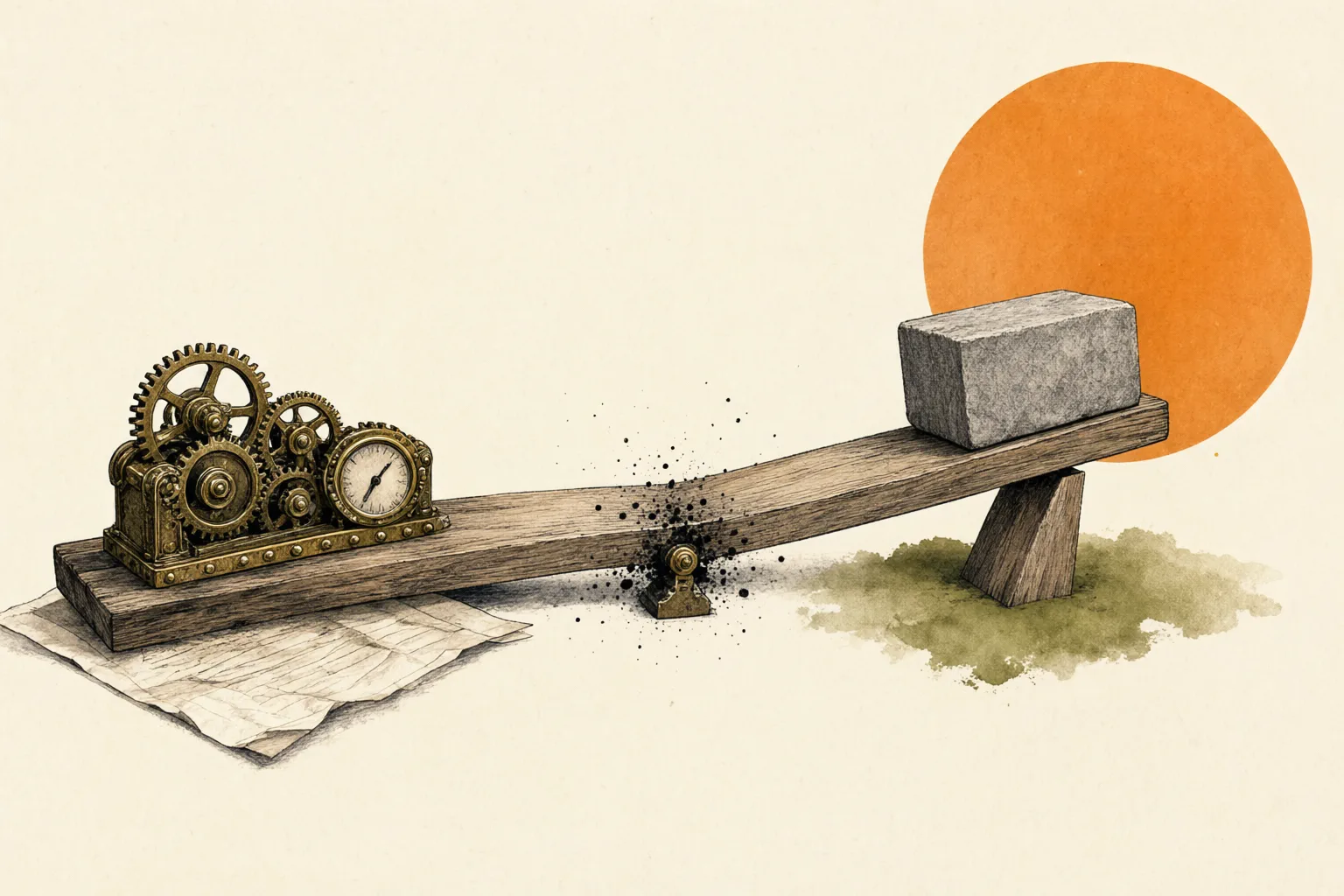
The honest split is this: AI is a strong copy editor, a decent continuity checker, a useful second reader, and a poor developmental editor. Plan the budget around that.
A workflow that keeps the decisions
- Write the facts down first. Five lines per key person or case, the terms, the timeline, the key promises. This is the reference the editor will check against.
- Mount the notes. Put the source material in a knowledge base and attach it to the book, so the editor is checking against the real files, not its idea of your industry.
- Edit chapter by chapter. Do not paste the whole book into one context and ask for a pass. Neither humans nor models edit a whole book well in one sitting.
- Ask for a memo, then edits. Never combine critique and rewrite in one prompt.
- Apply fixes yourself, or request one targeted rewrite. “Rewrite this paragraph” is safe. “Rewrite this chapter” is where voice goes to die.
- Version every round. A suggestion should never overwrite the manuscript. In our editor, each chapter keeps a version history, so a bad pass is one click from being undone.
- Run the cross-book audit last. Then verify every flagged passage by hand.
A self-edit checklist
Use this before you pay anyone, human or otherwise.
- Read it aloud, or have it read to you. The ear catches run-ons and missing words the eye fills in.
- Change the font for one pass. A different typeface resets your reading brain.
- Build a style sheet. Names, places, numbers, dates, italics, heading case. Then search and fix each item.
- Read the chapter openings in a row. Do they all start the same way? Do they promise something different?
- Read the chapter endings in a row. Does each one make the next chapter necessary?
- List the promises. Every setup should have a payoff. Every payoff should have a setup.
- Check the facts. One pass against the cases, the numbers and the timeline.
- Read the first page last. It is the page readers judge, and by then you know what the book is about.
If you cannot afford a human editor
You are not alone, and the honest advice is not “use AI instead”. It is a budget of attention:
- Spend on a proofreader or copy editor if you can afford one layer. It is the cheapest layer with the clearest return.
- Use AI plus a style sheet for the mechanical pass you cannot pay for.
- Ask beta readers from the group the book is for. They will not line-edit, but they will tell you where they stopped learning, which is the developmental note you actually need.
- Swap manuscripts with another writer. A swap produces more useful notes than a generic beta read.
- Treat the AI pass as preparation, not as the finish line.
The bottom line
A free online book editor is worth using when you give it the jobs it can do: mechanical consistency, contradictions against stored facts and notes, a diagnostic memo, a cross-book audit. It is worth avoiding when you ask it to decide whether the book works. The editor makes the manuscript cleaner. The writer makes it worth reading.
Key takeaways
- 1Editing is four layers; AI is strong at copy and proof, weak at developmental judgment.
- 2The most valuable AI check is a contradiction pass against facts and notes you wrote down.
- 3Ask for a diagnostic memo, then targeted edits — never a whole-chapter rewrite.
- 4A blanket “make it better” pulls the prose toward the average; ask for problems, not prose.
- 5Read aloud, change the font, build a style sheet: the free checks still do the most work.
Frequently asked questions
Can AI edit my book for free?
It can do the mechanical pass and a consistency pass against notes you supply, and free tiers usually cover a few chapters a day. It cannot replace a developmental editor, and it should not rewrite whole chapters without your decisions.
What can an AI editor not do?
It cannot tell whether the middle earns its pages, whether a chapter should be cut, or whether the ending pays the promise of the introduction. Those are judgments about the whole book, and a model is most confident exactly where it is least reliable.
Will AI editing make my book sound like AI?
Large rewrites will. Voice disappears when a model re-sentences a whole chapter, and the result drifts toward the average. Use it for diagnosis and small, targeted fixes, and keep versions so you can compare. If a change flattens your voice, reject it.
Should I use an AI editor before or after a human editor?
Before. Clean the mechanical layer and the obvious contradictions first, so a paid editor spends their time on structure rather than typos. If you cannot afford a human editor, use AI plus beta readers, and be honest with yourself about what is missing.
Sources
- Chicago Manual of Style — Editorial style basics — read on 2026-11-18
- Google Search Central — Creating helpful, reliable, people-first content — read on 2026-11-16
About the author

One useful essay, every other week
Notes on writing, publishing, and the unglamorous parts of shipping software. No roundups, no growth hacks.