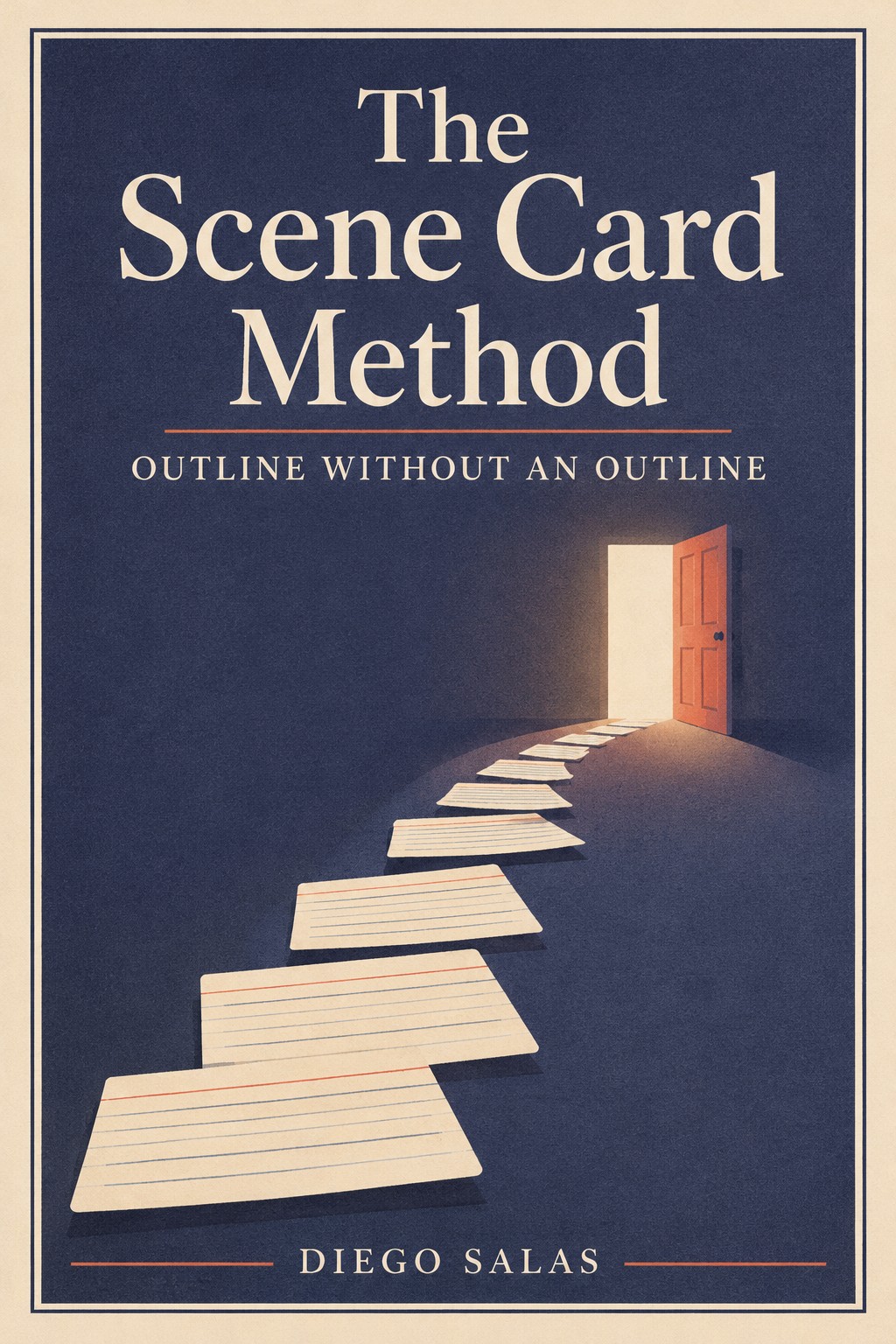
The Scene Card Method
Outline without an outline
by Diego Salas
A method for writers who hate outlining: build the book from cards you can move, cut and reorder. No three-act worksheet, no character questionnaire — just the scenes and what each one changes.
How this one was built
Built from the guide template. The one-card-one-scene rule was a key fact, so the method stayed a deck rather than turning into a spreadsheet.
Sample only — the manuscript is not for sale. The plan is free to copy.
Read the first chapter
The opening, in full. About 2 min. Turn the pages with the arrows, your keyboard, or a swipe.
Chapter 1
One card, one scene
An outline fails when it is written as topics. "Chapter four: the argument." A topic tells you what the chapter is about, which is a critic's question. A scene card tells you what changes, which is a writer's question. The difference looks small on paper and decides whether the draft moves.
Take an index card, or a note on your phone, or a sticky note — anything you can physically reorder. On it, write one scene. Not a chapter, not an act. One continuous piece of action in one place with the people who are there.
What's inside
1 chapters · 365 wordsEvery chapter in the book, with the one-line recap it is written against. The first is free above; the rest arrive as empty pages when you copy the plan, and cost 3 credits each to write.
Chapter 1 — One card, one scene
Write the scene as a change, not a topic, and give every card a before and after.
Who it is for
For writers who find outlines lifeless and drafting without one chaotic.
What you end up with
A deck of scene cards you can shuffle, a visible shape for the book, and a draft that stops wandering in the middle.
Build mine from this
Plan free · 1 credits to write the chaptersYou get the same 1 chapters, in the same order, with the same recaps — and an empty page under each one. Change the title and the angle, then write it in your own words.
Or start with your own idea
Pick the type, write the premise, and the plan gets generated for your topic instead. Export it as EPUB when it is done.